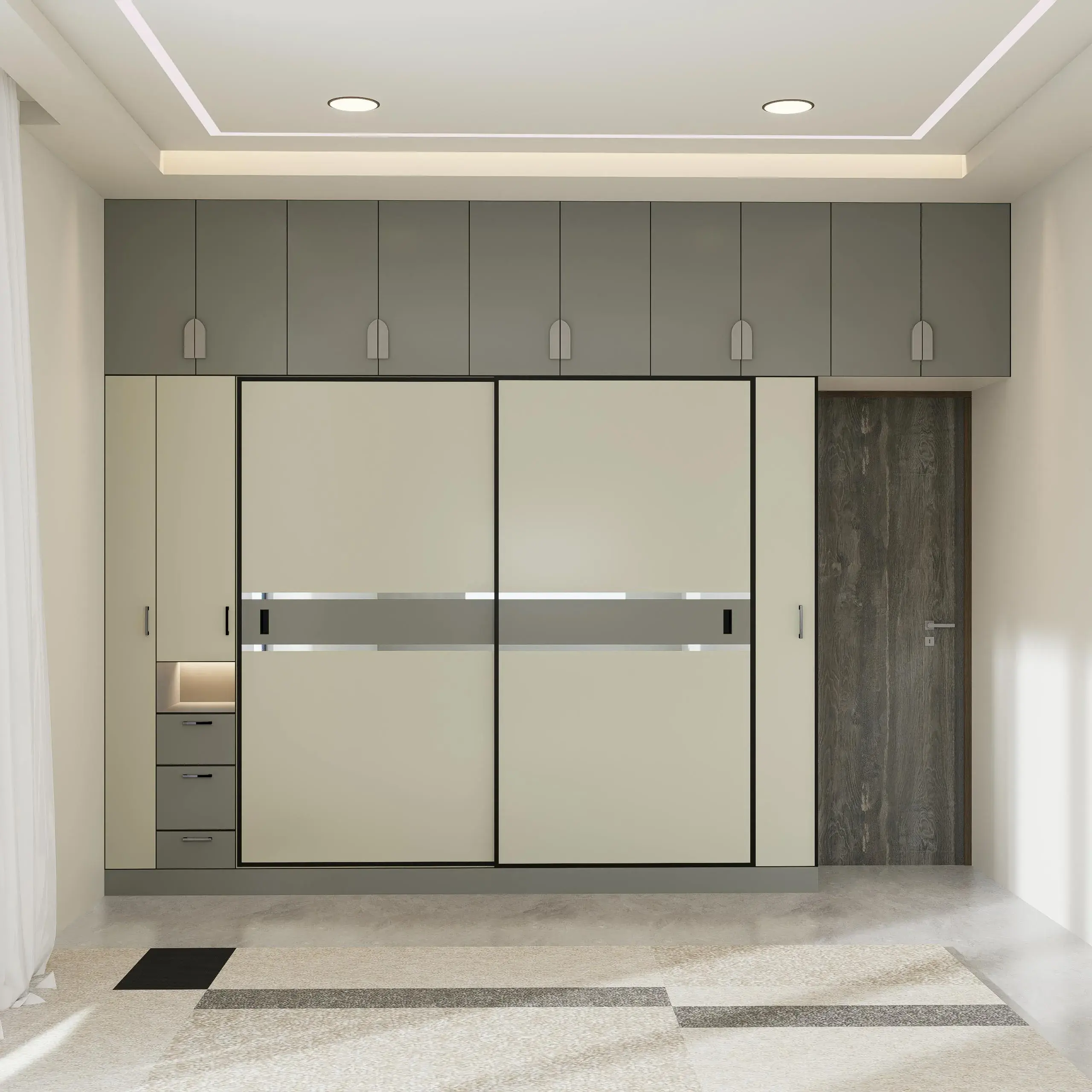
Choose wardrobe doors with the bed and bedside furniture drawn in place. Sliding doors move across the cabinet face, which avoids a door swinging into the room. Hinged doors swing outwards and need that space, but can give direct access to individual compartments. The better choice depends on how you reach the clothes and drawers behind them.
For custom wardrobes in Dubai, settle the opening method before approving the internal layout. A tidy elevation can hide an awkward drawer or a hanging section that is only partly accessible.
Start with the space you stand in
Mark the wardrobe face on the room plan, including any handles. Add the full bed frame rather than just the mattress size, then show the bedside tables and bedroom door. Ask the designer to draw the wardrobe doors open.
With hinged doors, check the position where you would stand to take out a garment. Allow for the open door as well as your movement around it. A door that technically clears the bed may still leave an uncomfortable place to dress.
With sliding doors, repeat the exercise with an internal drawer pulled out. Sliding fronts remove the outward door swing; the person using the wardrobe and the open drawer still need space. This is particularly useful to check in an existing Dubai apartment where the bedroom dimensions are fixed.
Compare the access, compartment by compartment
| Question | Hinged doors | Sliding doors |
|---|---|---|
| Can I reach the section I use most? | Check the opening angle and nearby furniture. | Check how much of that section is exposed when the panel moves. |
| Can every drawer open fully? | Confirm that hinges and door edges clear the drawer. | Confirm that overlapping panels do not cover the drawer front. |
| Can two people use the wardrobe together? | Test adjacent open doors and standing positions. | Test which sections remain available with the panels in each position. |
| How will I clean and maintain it? | Ask how to reach and adjust the hinges. | Ask how to clean the tracks and reach the running hardware. |
Have the designer show the actual proposed system. Different sliding arrangements expose different parts of the cabinet, so a showroom example is useful only if it matches the layout being specified.
Test it using your morning routine
Choose a few items you use together, such as a shirt and the drawer containing accessories. On the drawing, move the door to reach each item in sequence. If reaching the drawer means closing off the hanging rail every time, decide whether that movement will bother you.
For a shared wardrobe, run the same exercise for both users. Separate daily-use sections may be more useful than a perfectly symmetrical internal arrangement. Keep occasional storage where it can be reached safely without interrupting the compartments used every day.
The broader wardrobe storage brief helps establish what belongs inside. Use that inventory to test the door choice, then adjust the compartments before manufacture.
Specify the mechanism behind the finish
Ask for the hardware manufacturer and model, together with confirmation that it suits the proposed door dimensions, material and weight. A heavy mirrored panel and a smaller timber door need to be assessed against their own system requirements.
For example, Hettich's SlideLine range includes different sliding systems and soft-closing arrangements. That illustrates why the words “sliding door” alone do not describe the mechanism you will receive. The joiner should identify the selected product and its installation information; this example does not imply Halo supplies a particular brand.
Operate a sample if one is available. Notice where the handle sits, how the door starts moving and what happens as it closes. Confirm how adjustments and replacement parts will be handled after installation.
Make the final choice in the room
Take the preferred arrangement back to the measured plan. Check sockets, nearby switches and any window opening beside the wardrobe. Review the appearance of the doors under the room's lighting, especially if a mirror will reflect the bed or a bright fitting.
Halo's in-house joinery team makes fitted wardrobes and dressing-room cabinetry. Bring a room plan and photographs of the furniture you intend to keep so the consultation can resolve the opening method alongside the storage layout.