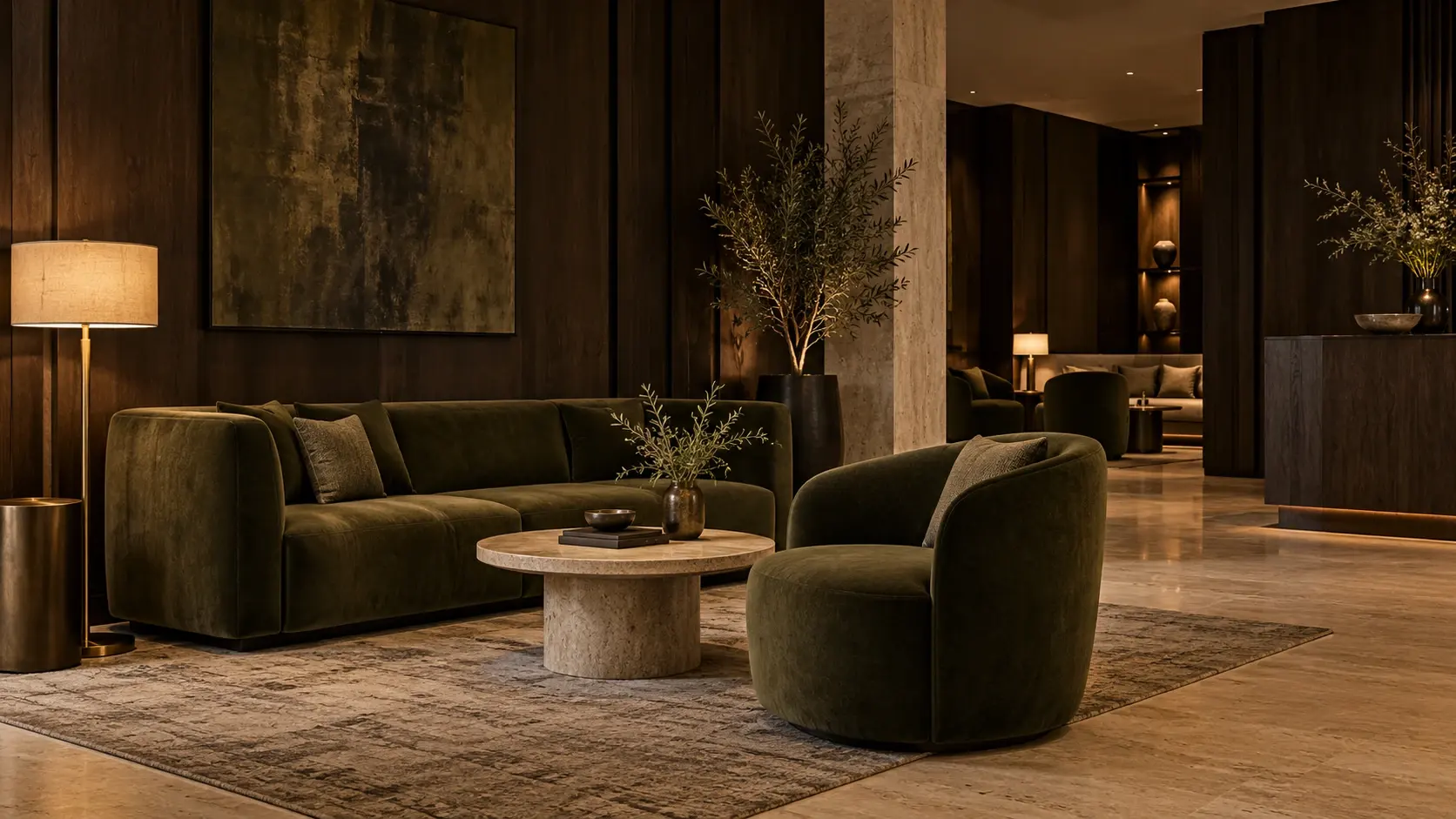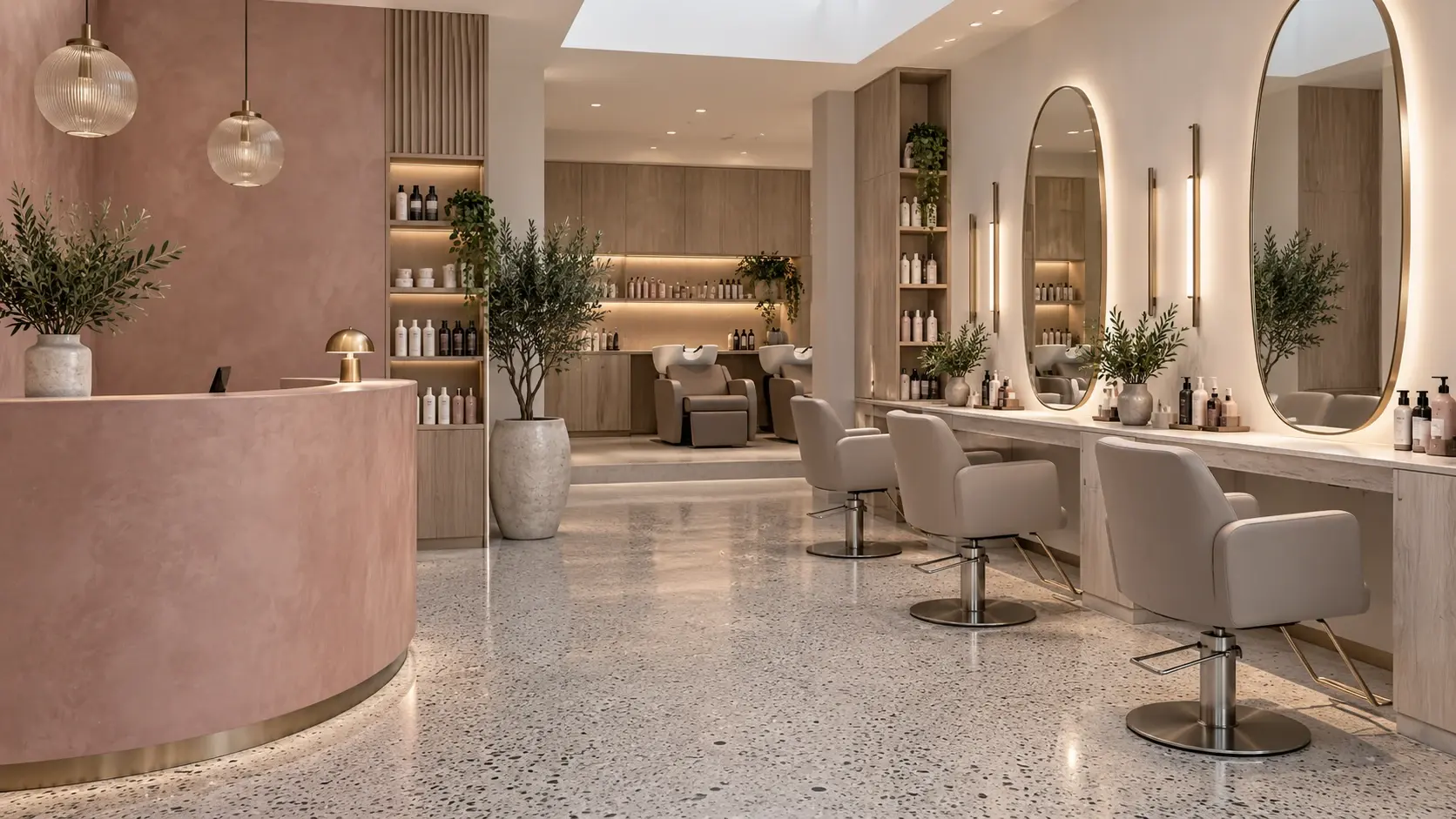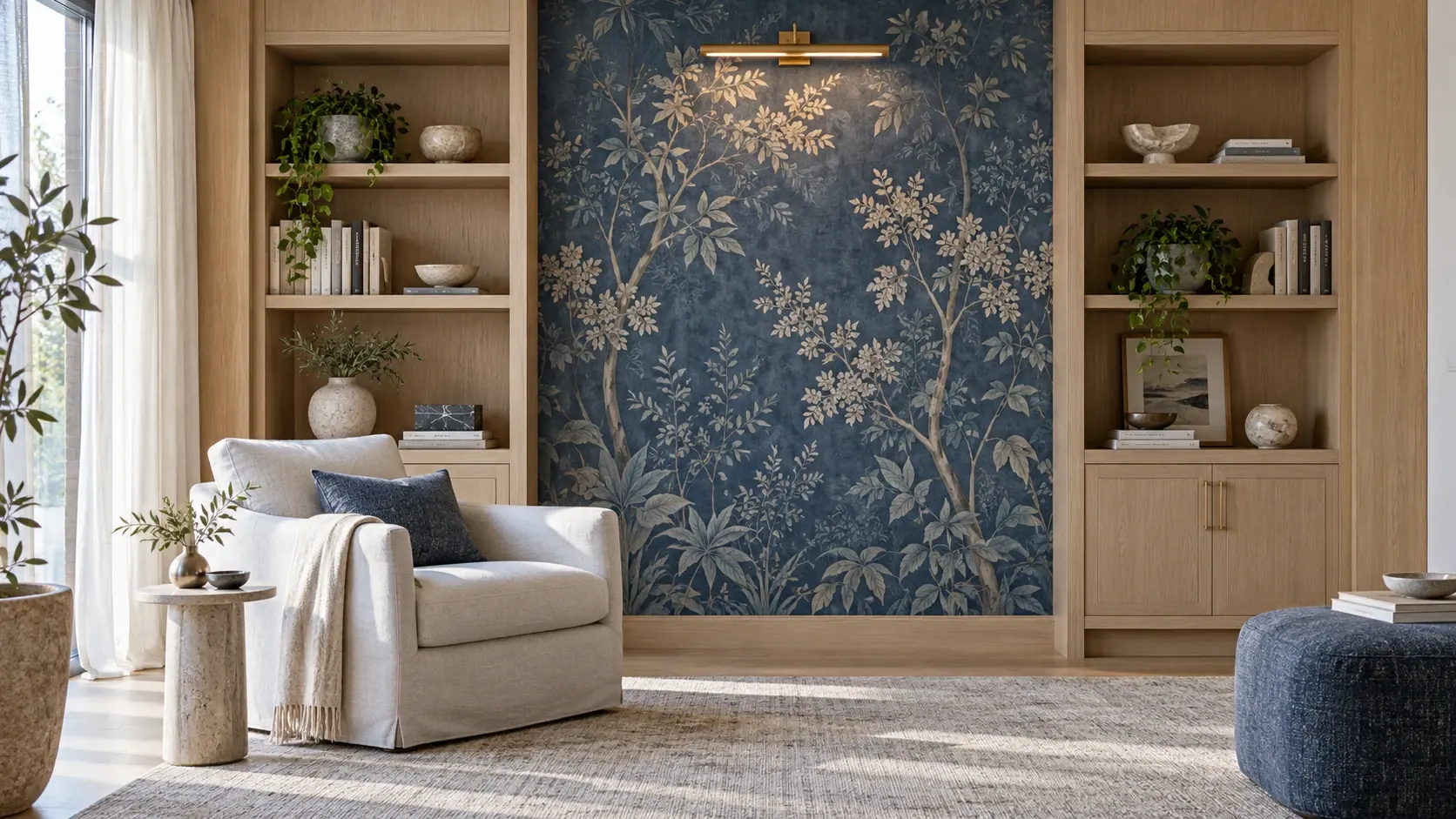
Wallpaper works best when it has a clear job: soften a bedroom, give a dining wall more depth, define a study or carry a pattern through a quiet circulation space. Before choosing a print, decide how the wall is used, how it meets nearby joinery and whether the substrate is ready to receive it. Those decisions matter more than the sample-book photograph.
Start with the wall's role in the room
Name the wall and what the room asks of it. A backdrop behind a bed, a wall between built-in shelves and a narrow entrance corridor do not need the same scale of pattern or finish. Think about the sightline from the doorway, the amount of daylight and artificial light, and whether the wall will compete with stone, curtains, artwork or a feature joinery piece.
Bring a full sample into the room rather than judging from a small swatch. Look at it in daylight and under the proposed evening lighting. If the design has a repeat, mark where the repeat should start and where a cut will be least visible.
Survey the substrate before selecting material
Wallpaper cannot make an uneven, damp or moving wall disappear. The team should inspect the wall for previous coatings, cracks, moisture signs, uneven patches and areas that need access after installation. Resolve those conditions first.
Record switches, sockets, grilles, access panels, curtain tracks and junctions with doors or wardrobes. If a surface needs to be opened later for a service, wallpapering across it without an agreed detail creates an avoidable repair problem.
Coordinate wallpaper with joinery and lighting
The most convincing installations are drawn as part of the composition. Set the width of shelving bays, mirror frames, panelling, headboards or picture lights against the paper repeat before manufacture begins. A centred light on a misaligned pattern is hard to ignore.
Halo's bespoke joinery team can coordinate fitted elements with the wall treatment when both sit in the same scope. For a larger home project, the villa renovation service provides a route to coordinate finishes, lighting and construction work as one fit-out sequence.
Choose by room conditions, not only colour
Use the room brief to narrow the material choice. In a quiet bedroom, texture and softness may lead the choice. In a busy entrance or a room with frequent contact, ask how the selected finish will be cleaned, repaired and matched later. Wet rooms and splash-prone areas need a site-specific material decision rather than an assumption that every decorative paper behaves the same way.
Keep one reference board for the wallpaper, paint colour, timber stain, stone, upholstery and metal finishes. This makes undertones visible before work starts. It also stops a carefully chosen paper from being asked to solve a palette that was never resolved.
Give the installer a usable set-out
Before installation, agree the starting point, vertical reference, repeat alignment and locations of unavoidable cuts. Photograph the sample and approved layout, and keep spare material from the same batch for future touch-ups where practical. The installer should know which wall is the visual priority and which corners can carry a less visible join.
Halo's decorative paint and finishes service is a useful starting point when wallpaper needs to sit beside textured wall treatments, panels or painted surfaces. Bring the room measurements, samples, photos of existing conditions and any joinery drawing to an early review. That is enough information to test the finish as part of the room rather than as an isolated product choice.