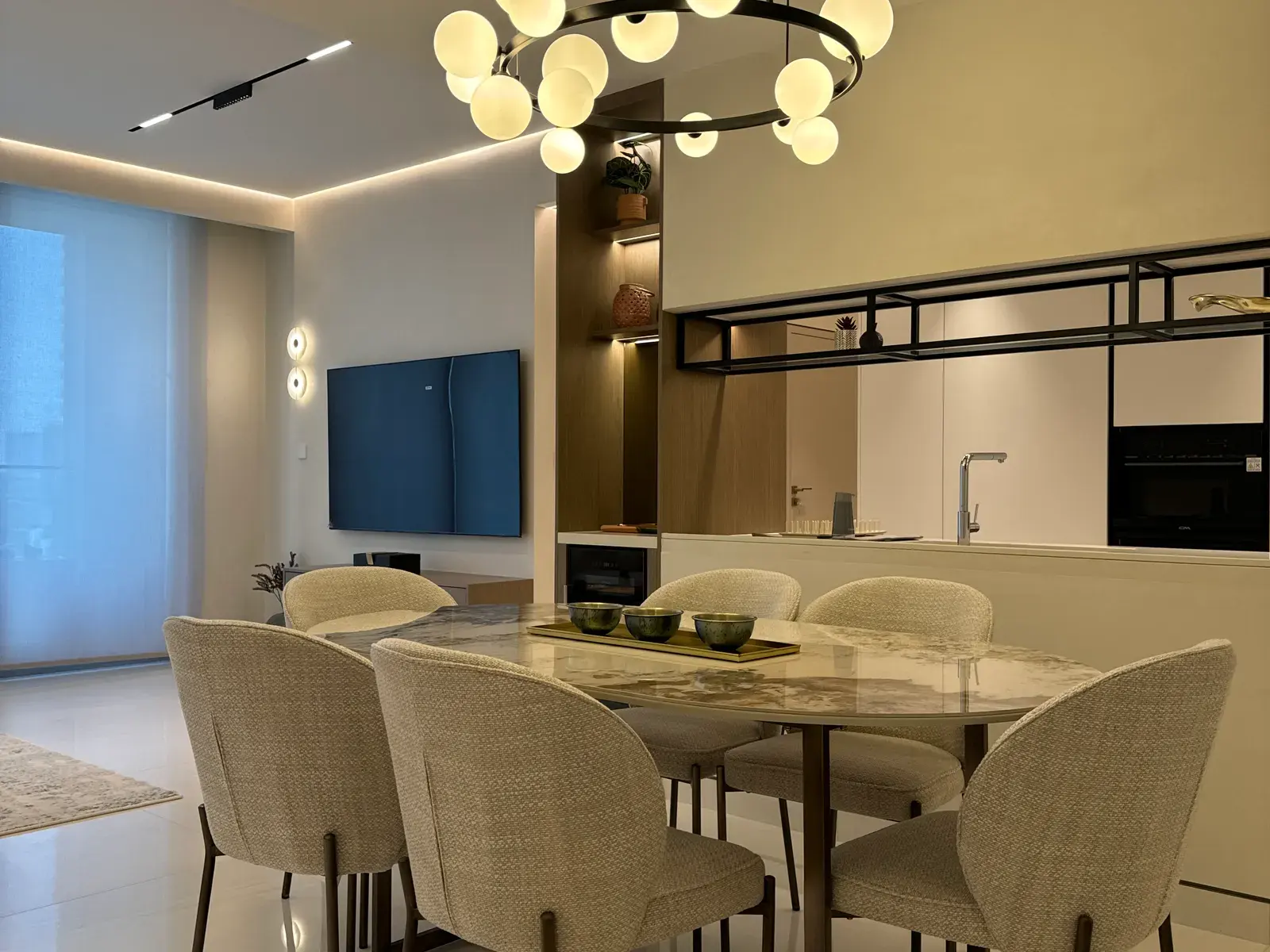
"Turnkey" is the most overused word in the Dubai renovation market and the least consistently defined. Some contractors mean design through handover under one contract; others mean they will manage the subcontractors you would otherwise have had to manage yourself. The difference determines who absorbs the risk when trades conflict, approvals stall, or a finish arrives wrong.
This guide sets out what full-service renovation delivery actually covers in Dubai — authority approvals, MEP, joinery, finishes, handover and snagging — what sits inside a turnkey scope, what a single-trade appointment leaves you to coordinate, and what each costs.
What Turnkey Renovation in Dubai Actually Means
A turnkey renovation contract places every phase of your project under a single agreement: concept design, procurement, authority approvals, execution across all trades, and formal handover with documented snagging closure. The alternative is fragmented appointment, where the property owner sources and coordinates an architect, a separate MEP contractor, a joinery workshop, and a finishes team independently, whilst personally managing every authority submission in parallel. In Dubai's regulatory environment, that fragmented model carries real risk.
Dubai Municipality approval is mandatory before any structural or MEP works begin. DEWA certification is a discrete requirement wherever electrical loads, meters, or risers are affected, and only firms on DEWA's approved-contractor register may submit LV design drawings for sign-off. Beyond those two, most gated communities and high-rise towers require a developer NOC before a single tool enters site; without it, building management can and does block site access entirely. Coordinating these submissions whilst simultaneously managing a live fit-out requires authority approvals experience in Dubai that takes years to build, not something an owner should attempt to improvise across separate contractors.
We established Halo Interiors LLC in Dubai in 1996 and have since delivered over 1,200 projects across the residential and commercial sectors as a DM-approved and DEWA-certified contractor. Our villa and apartment renovation services operate as a fully integrated scope: one contract, one point of accountability, and an in-house team that covers design, structural, MEP, joinery, and decorative finishes without subcontracting the core disciplines. That structure means approvals are pursued in parallel with design development, not after it, which is where most delays originate on fragmented projects.
If you are assessing scope for a renovation in Dubai, a free site visit is the most practical starting point. Contact our team via WhatsApp at +971 55 969 3009 to arrange one at no obligation.
Turnkey Scope vs. Single-Trade Contractors in Dubai: What You Actually Manage
The difference between the two models is not simply a question of convenience; it determines who absorbs every risk, delay, and coordination failure on your project.
| Scope Area | Full-Service Turnkey Company | Single-Trade Contractor Approach |
|---|---|---|
| Design | In-house design team; design and execution under one contract | Owner appoints a separate designer; design liability sits with the designer, not the trades |
| Authority Approvals | In-house approvals team manages DM, DEWA, and developer NOC submissions | Owner must appoint a separate approvals consultant; drawings and on-site execution can diverge |
| MEP | MEP coordinated with civil works and finishes under a single programme | Owner appoints electricians and plumbers separately; sequencing is the owner's responsibility |
| Joinery | Fabrication and installation scheduled against MEP sign-off | Owner appoints carpenter independently; start date depends on the owner chasing other trades |
| Decorative Finishes | Applied only after MEP rough-in is inspected and signed off | Risk of finishes applied before MEP clearance, triggering costly rework at the owner's expense |
| Project Management | Single programme, one point of contact, site manager on the contractor's payroll | Owner becomes the de facto project manager without technical credentials or approved-contractor status |
| Snagging | Formal snagging process before handover; defects identified and remedied by the same party | No single party owns the snagging list; each trade disputes responsibility for cross-trade defects |
| Warranty | Single defects liability period under one contract | Each trade carries its own informal warranty; owner pursues multiple parties for any post-handover defect |
The Hidden Cost of Fragmented Coordination
Three specific failure points consistently affect owners who self-assemble a team of single-trade contractors in Dubai. First, sequencing delays: no trade can begin until the preceding one finishes, and when the owner holds no scheduling authority over each contractor, delays compound across the programme. Second, premature finishes: tiling, paint, and joinery installation applied before MEP rough-in is signed off must be opened up and redone, a direct cost borne entirely by the owner. Third, authority rejection risk: when the party submitting drawings to Dubai Municipality and the party executing on site operate independently, the built work and the approved drawings can diverge, exposing the project to rejection or a stop-work notice.
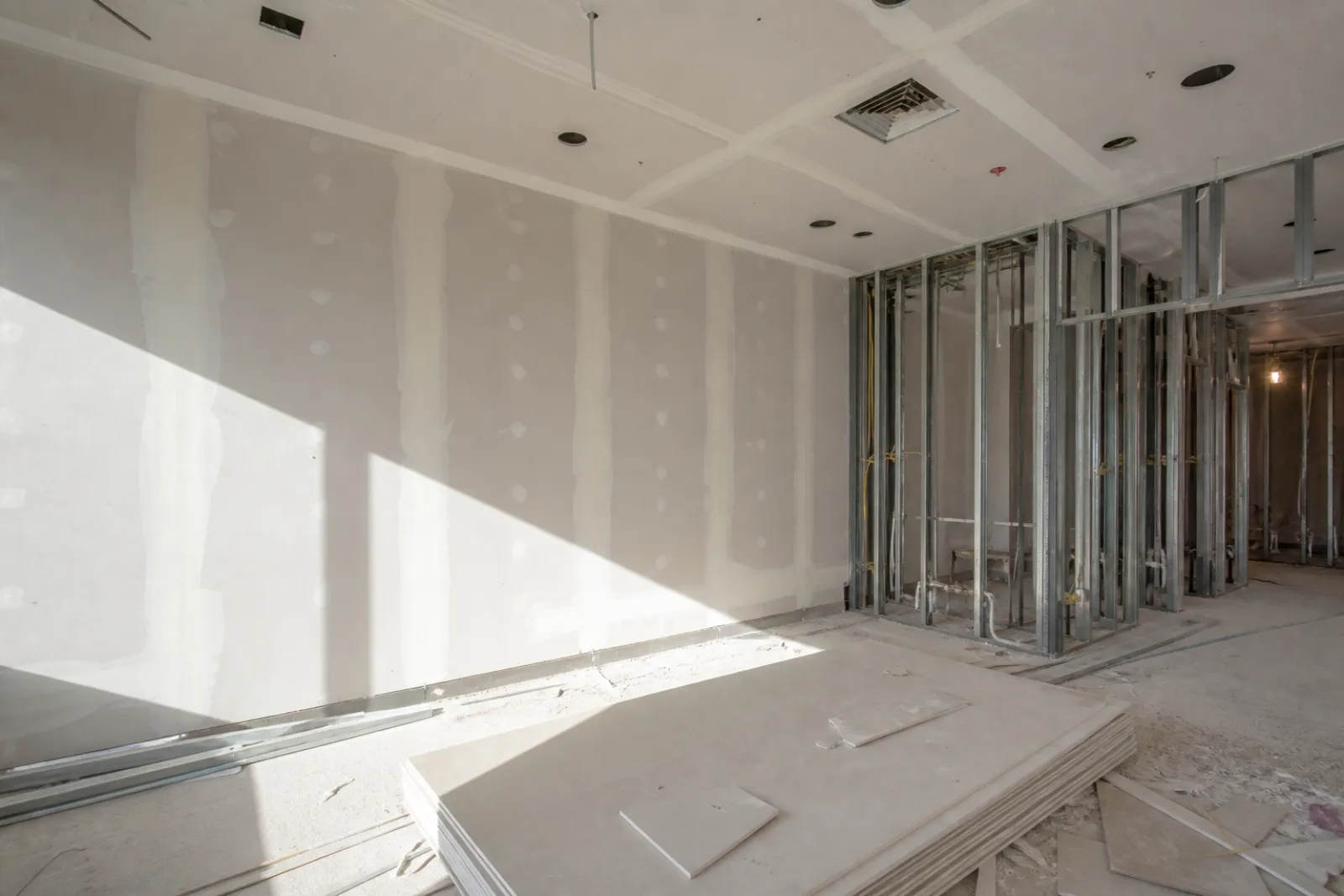
Our approach to fit-out delivery in Dubai eliminates all three risks by keeping design, approvals, MEP, joinery, and finishes under a single programme managed by one team.
The Villa Owner as Unqualified Project Manager
On a full villa renovation involving five or six separate contractors, the owner is not simply a client; they are functioning as the project manager. That role demands near-daily site presence, supplier coordination, material verification, and the technical knowledge to sequence trades correctly. Without approved-contractor credentials and site authority, resolving a dispute between a plumber and a plasterer falls entirely on the owner to mediate, often at a cost in both time and rework. Programme coordination is a professional discipline, and absorbing it by default is one of the less visible but most consequential risks in the fragmented model.
From Brief to Handover: How a Dubai Renovation Project Runs End to End
Every project we take on moves through six defined stages, each one gated before the next begins. This sequence is not a formality; it is the mechanism that keeps scope, budget, and programme aligned from the first site visit through to the day we hand over keys.
Stage 1: Brief and Site Survey
We begin with a measured survey of the property and a written condition report documenting the existing structure, services, and finishes. Running in parallel, we confirm the client brief: design style (contemporary, Japandi, neoclassical, ultra luxury, Mediterranean, or any other direction), spatial priorities, and the budget envelope that will govern every downstream decision. Setting these parameters in writing at the outset is what prevents costly scope changes once execution is under way.
Stage 2: Design and Drawing Package
Our in-house architects and draftsmen translate the confirmed brief into a full drawing package: concept visuals, working drawings, material schedules, and a Bill of Quantities. Producing the BOQ internally, against our own drawings, eliminates the ambiguity that typically emerges when design and quantification are handled by separate firms. Every material quantity is locked to an approved drawing before procurement begins.
Stage 3: Authority Approvals
Dubai renovations require submissions to Dubai Municipality, DEWA certification where works affect utility connections, and a developer NOC for properties within gated communities and towers. Our in-house approvals team manages all three concurrently rather than sequentially, which compresses the overall programme. Clients who attempt this independently frequently encounter delays at this stage; keeping accountability centralised within one team removes that risk. Full details of our authority approvals for Dubai renovations are available on our services page.
Stage 4: Procurement and Programme
With approved drawings in hand, materials are ordered directly against the drawing set. A formal site programme is issued at this stage, with trade sequencing locked in a specific order: demolition, structural works, MEP rough-in, joinery installation, wet areas, decorative finishes, and FF&E. This sequencing discipline matters because each trade creates the conditions for the next; compressing or reordering it generates rework. Materials are scheduled for delivery in alignment with the programme to prevent idle time on site.
Stage 5: Execution
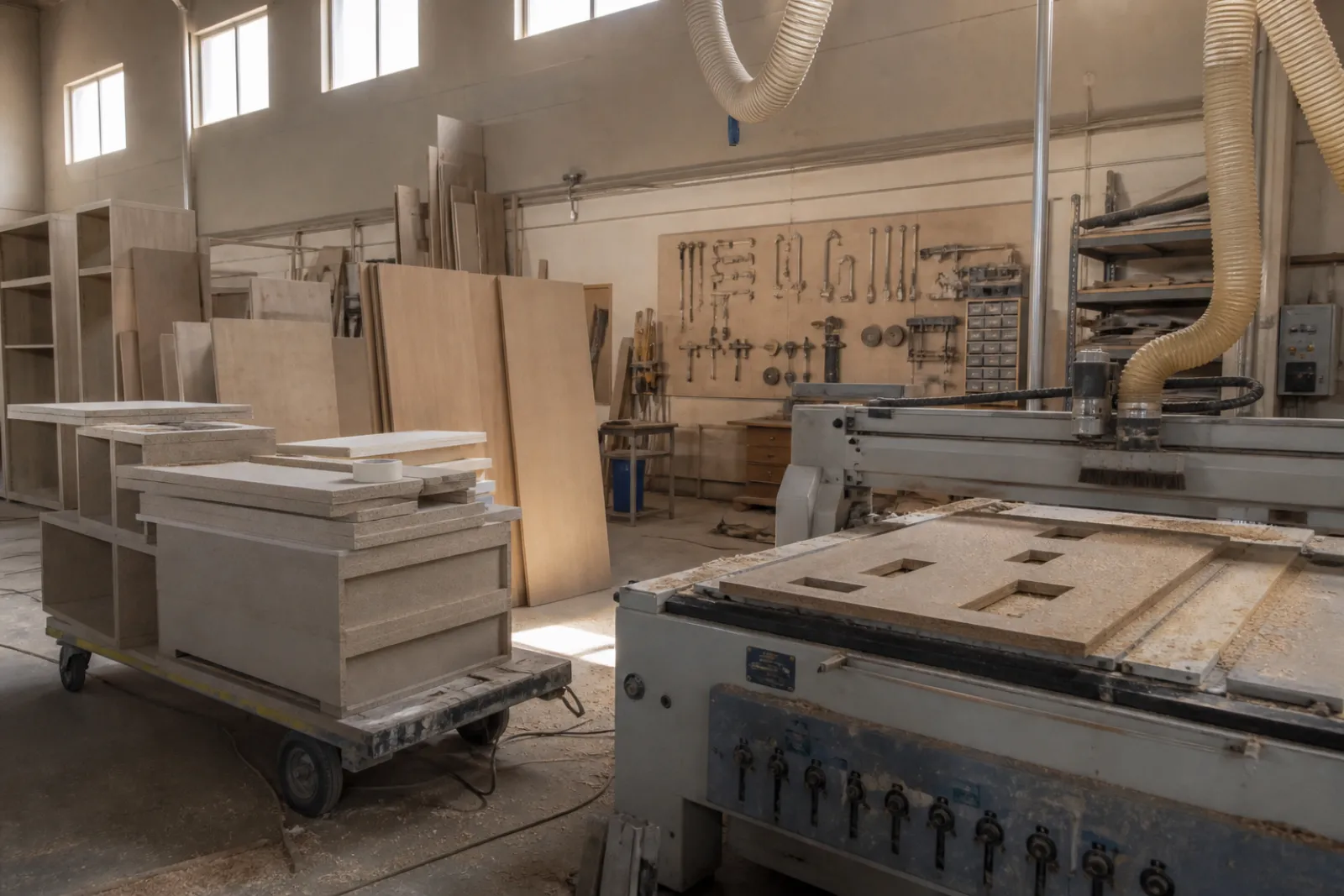
Our in-house MEP team, structural engineers, and 75 carpenters and painters from our 15,000 sq ft Al Quoz joinery facility execute concurrently against the locked programme. Having skilled trades employed directly, rather than drawn from the open subcontractor market, gives our clients meaningful programme certainty. Our project management services include regular client reporting throughout execution so that progress, variations, and material sign-offs are documented in real time.
Stage 6: Snagging and Handover
Before any client walkthrough, we conduct an internal quality check against the drawing set and specification. A construction project handover is, in practice, a structured process rather than a single event; it requires a formal defects list, assigned remediation owners, and close-out confirmation on every item before documentation is issued. Our walkthrough with the client produces a written snag list; all items are closed before formal handover documentation is signed and transferred. Nothing is left outstanding at the point of handover.
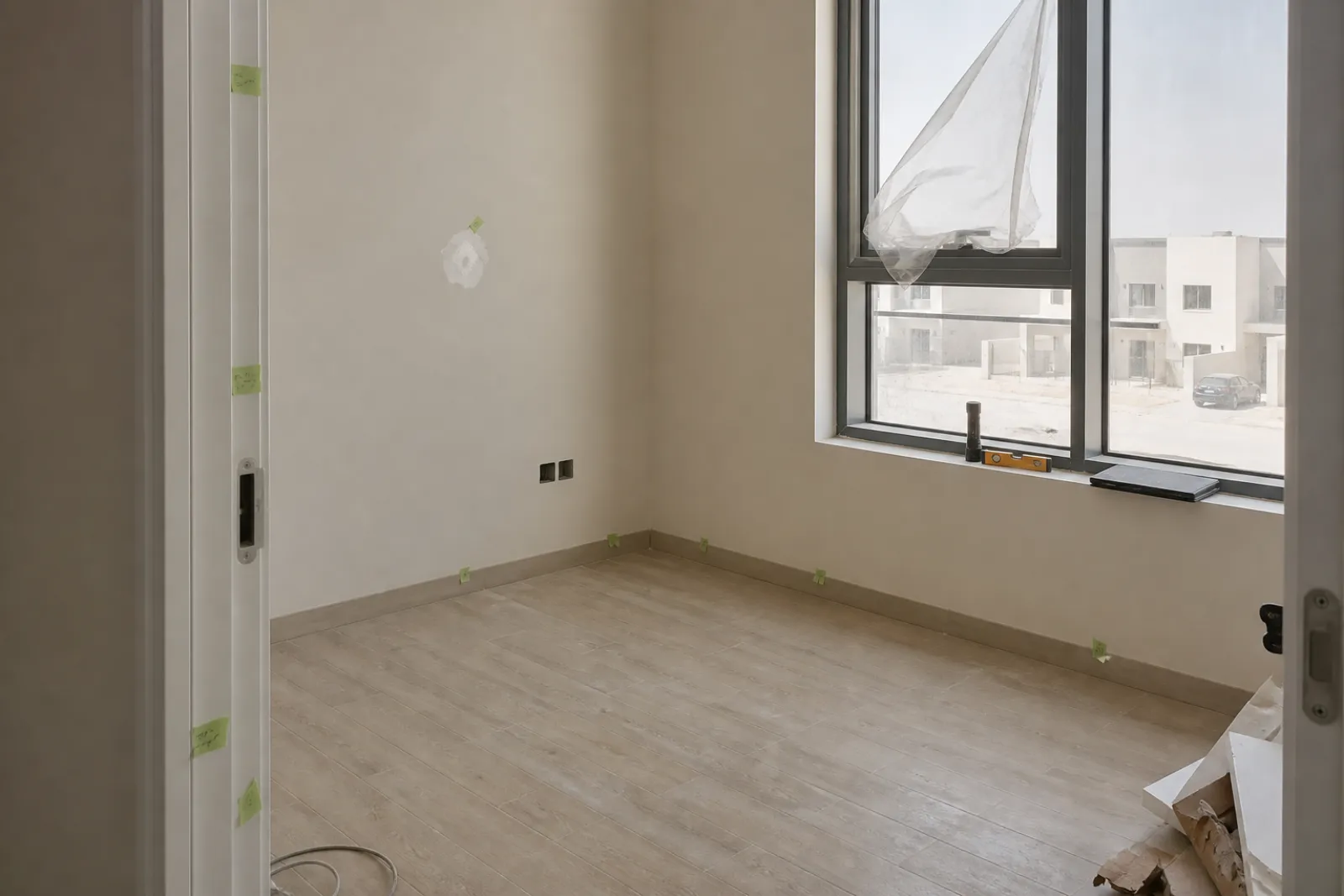
Authority Approvals in Dubai: Why They Matter for Any Renovation
Any renovation in Dubai that moves beyond cosmetic changes sits inside a regulated approval framework administered by three distinct bodies, and understanding who governs what determines whether your project proceeds on programme or stops at a compliance barrier.
Dubai Municipality holds jurisdiction over structural and architectural changes across most of the emirate. If your renovation involves removing or constructing internal walls, relocating plumbing routes, altering a façade, changing the designated use of a space, or modifying any load-bearing element, a DM permit is required before work begins. Cosmetic works such as repainting, like-for-like fixture replacement, or flooring overlays typically fall outside the permit threshold, but the boundary is not always self-evident, and confirming the classification with building management before proceeding is sound practice.
DEWA holds mandatory jurisdiction over any modification to electrical or water infrastructure. This applies whether the project is a full villa renovation or a targeted fit-out involving panel upgrades, additional circuits, or rerouted plumbing. Submissions to DEWA require technical drawings covering load calculations, wiring specifications, water connection details, and energy-efficiency compliance, followed by physical inspection and sign-off before the modified systems can be connected to the main network.
Master developers and owners' associations introduce a third layer that many property owners overlook entirely. For any property within a gated community, residential tower, or mixed-use development, a No Objection Certificate from building management is a mandatory prerequisite before authority submissions can even be lodged. The NOC review covers the proposed layout, MEP scope, and any potential impact on shared infrastructure or common areas. The complexity here varies considerably by location; different master developers operate under their own requirements, and projects in certain free zones or designated development areas involve additional regulatory bodies beyond DM.
Working without the relevant approvals carries material risk. Dubai Municipality is the primary enforcement authority, and unapproved structural or layout changes can result in stop-work orders. Beyond the immediate disruption to programme, unapproved works can affect a property's legal standing and its attractiveness to future buyers, tenants, and investors. Importantly, the legal responsibility for obtaining residential renovation permits rests with the property owner, not the tenant, even where the tenant has initiated the works.
There is also a practical constraint that the market frequently underestimates: only DM-approved contractors can formally submit and manage approval files on an owner's behalf. An unlicensed subcontractor, regardless of how technically capable they are, cannot lodge drawings or respond to authority queries. The submission package itself, covering architectural layouts, MEP designs, reflected ceiling plans, fire safety drawings, and material specifications, must be prepared and submitted by an approved entity. Our authority approvals service in Dubai is built around exactly this requirement.
Approval timelines vary by project type and authority workload. Residential submissions to DM typically run in the range of several weeks; commercial projects take longer, particularly where multi-departmental review is required. The elapsed time is directly affected by submission quality: incomplete drawings or mismatched specifications generate revision cycles that extend the programme considerably. Having an in-house approvals team rather than routing files through a separate consultant removes one handoff from the chain. Because our architects, draftsmen, and MEP engineers work in the same team that is building your project, revision requests from the authority are addressed immediately rather than being relayed across firms. Our dual status as a DM-approved contractor and DEWA-certified firm means both approval tracks are managed internally, under one agreement, without an additional consultant layer added to your budget or your timeline.
Indicative AED Cost Bands for Renovation Projects in Dubai
Cost varies considerably by project type, finish tier, and the condition of the property on day one. The bands below reflect the scope of work we commonly price in Dubai; they are reference ranges, not fixed quotes, because no two properties are identical.
Apartment refresh (cosmetic works only)
A cosmetic-tier apartment renovation in Dubai, covering paint throughout, flooring replacement, kitchen front replacement, and bathroom retiling, typically falls between AED 60,000 and AED 150,000. The spread is driven primarily by apartment size, the finish tier specified, and whether ceilings and joinery are being addressed. A studio refresh sits toward the lower boundary; a three-bedroom with upgraded sanitary ware and engineered timber flooring will approach the upper end.
Mid-range apartment full renovation
When the scope expands to include MEP upgrades, new bespoke joinery, full wet area refit, and decorative finishes such as microcement or feature walls, the budget range moves to AED 150,000 to AED 350,000. This tier typically involves new AC distribution, updated electrical boards, and a complete kitchen and bathroom overhaul rather than a surface refresh. It is the most common scope we price for investors preparing a property for resale or long-term rental uplift.
Villa partial renovation
A partial villa scope covering selected rooms, kitchen, and bathrooms, with landscaping excluded, sits between AED 250,000 and AED 600,000. Villas carry higher base costs than apartments because of multi-floor coordination, larger kitchen and bathroom footprints, and the higher-specification finishes most villa owners specify. Structural interventions, even modest ones such as removing a non-load-bearing partition, add approval costs and extend the programme.
Full villa transformation
A gut renovation incorporating structural changes, full MEP replacement, bespoke joinery throughout, luxury decorative finishes, plus landscaping and pool works runs from AED 600,000 to AED 2,000,000 and above. At this level, authority approval drawings, community NOC fees, specialist subcontractor scopes, and imported materials each represent meaningful line items. Projects at the upper boundary typically involve ultra-luxury or neoclassical design schemes with marble installation, custom metalwork, and high-specification home automation.
Commercial fit-out
Office, clinic, gym, and salon fit-out at mid-range specification is typically priced at AED 200 to AED 450 per sq ft. Clinic fit-out sits toward the top of this band and often above it, given the MEP and compliance requirements specific to healthcare spaces. Luxury hospitality and retail fit-out can materially exceed AED 450 per sq ft depending on brand standards and the density of bespoke joinery and specialist finishes specified.
What Moves Costs Upward
The single largest cost driver is structural modification requiring DM approval drawings. Beyond that, the following factors consistently push budgets higher: specifying bespoke joinery from our in-house joinery facility versus modular alternatives; selecting specialist decorative finishes including microcement, terrazzo, and marble installation; undertaking a full MEP replacement rather than a partial upgrade; and choosing design schemes with high detailing complexity, particularly ultra-luxury or neoclassical interiors versus minimalist ones.
What Reduces Costs
Retaining existing MEP routes is the most effective way to control budget, as full MEP replacement is consistently one of the largest single cost categories on any renovation. Using materials held in stock rather than imported bespoke items removes lead time costs and reduces the risk of programme delays. Phasing works across rooms rather than executing the entire property simultaneously can also allow budget to be distributed across financial periods without compromising the quality of each phase.
The BOQ Imperative
A ballpark estimate given without a measured site survey is not a budget; it is a placeholder that routinely omits scope items by a material margin. A detailed Bill of Quantities, drawn from a physical measured survey and a confirmed design brief, is the only reliable foundation for a project budget. We do not issue indicative costs without first visiting the property, because the condition of existing MEP, the structural configuration, and the specification choices all affect the final number in ways no desktop estimate can capture. Book a free site visit to receive a scope-specific assessment rather than a range.
What a Full-Service Renovation Company in Dubai Delivers Beyond the Build
Our bespoke joinery in Dubai is fabricated entirely within our 15,000 sq ft Al Quoz facility by a team of 75 skilled carpenters and painters. Wardrobes, kitchen cabinetry, vanities, bar units, majlis seating, and home office units are built to the project's exact specifications under our direct supervision, not delegated to a third-party workshop operating on a separate schedule. That in-house control means quality issues are caught on the factory floor, not after installation, and lead times reflect our programme rather than a subcontractor's capacity.
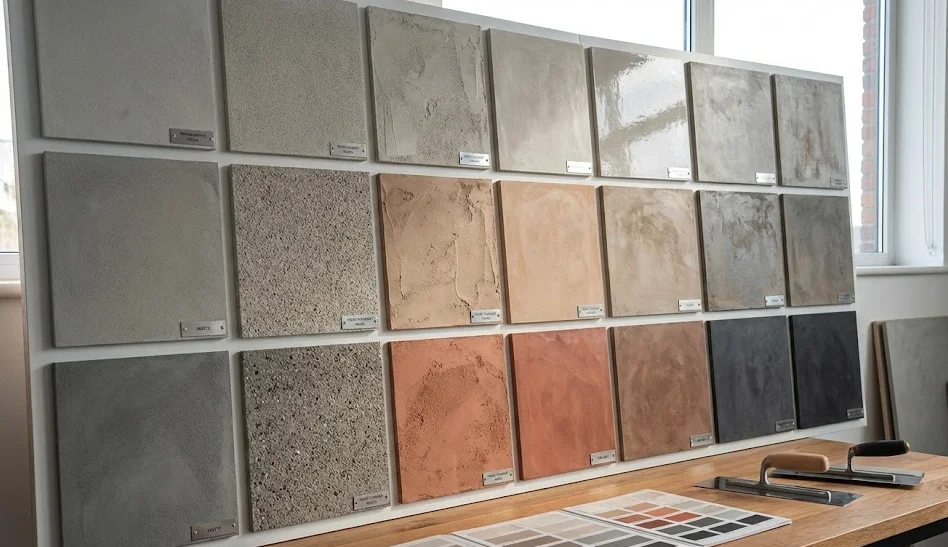
Specialist finishes form the next layer of delivery that single-discipline contractors rarely carry. Microcement floors and walls, terrazzo, marble and tile installation, decorative paint effects, stretch ceilings, and gypsum works each require trained applicators and material knowledge that sits outside a general contractor's scope. When these trades are brought in separately, the client inherits the scheduling gaps and accountability gaps between them.
Our in-house licensed MEP team covers electrical, plumbing, air conditioning, and mechanical ventilation within the same programme. A separate MEP subcontractor working to its own timeline introduces coordination risk that compounds across every trade that follows. Bringing MEP in-house removes that variable entirely.
Waterproofing is the trade most frequently under-scoped in fragmented projects and the primary driver of post-handover defects. Our Halo Shield system is applied to wet rooms, roofs, and below-ground areas as a defined scope item, not an afterthought added when a leak appears. The cost of rectifying water ingress after finishes are complete consistently exceeds the cost of specifying correctly upfront.
Home automation sits in a similar position. Lighting control, smart curtains, AV systems, and access control must be routed and coordinated before joinery and wall finishes close in around the infrastructure. Retrofitting these systems after handover means cutting into completed surfaces, which adds cost and compromises finishes. We specify and install automation within the fit-out programme so the infrastructure is built in from the start.
Finally, every project we deliver is verified through a structured post-handover snagging process. All works are checked against the agreed specification before the client signs off. For clients who want an independent layer of assurance beyond our own review, our property inspection division provides third-party inspection carried out by a separate team with no commercial interest in the outcome.
How to Evaluate a Renovation Company in Dubai Before You Sign
Before signing any renovation contract in Dubai, four verification steps will tell you more about a company's actual capability than any sales presentation.
DM registration first. Dubai Municipality publishes its registered contractor database publicly at dm.gov.ae, meaning you can search a company's registration number before a single dirham changes hands. A valid DM registration confirms the contractor can legally submit permit applications and authority approval files on your behalf. Without it, any works requiring DM permits cannot be properly filed, leaving you exposed to stop-work orders or complications at the completion certificate stage.
DEWA certification is equally non-negotiable. DEWA maintains its own classification system for consultants and contractors, entirely separate from the DM register. If your project includes any electrical or plumbing works, the contractor must hold active DEWA enrolment; DEWA will not accept LV design drawing submissions from non-enrolled firms. Confirm this in writing before scope is agreed.
Request a trade-level BOQ, not a lump sum. A single consolidated figure tells you nothing about whether the contractor has actually surveyed your property. A properly prepared Bill of Quantities breaks scope by trade: civil, MEP, joinery, finishes, specialist works. This level of detail is only possible after a physical site survey, and it gives you a basis for comparing quotations line by line rather than total against total.
Verify where joinery is fabricated. Subcontracted joinery introduces a layer between you and the manufacturer. If a piece is wrong in dimension, material, or finish, resolution runs through an intermediary, extending timelines and diluting accountability. In-house fabrication means the contractor owns the error and the correction directly. Our joinery is produced entirely within our Al Quoz facility, which is why we can commit to tolerances and rectify issues without outsourcing the conversation.
Match portfolio evidence to your project type. A strong record in apartment cosmetic refreshes does not translate automatically to competence in a full villa gut renovation involving structural changes, MEP reconfiguration, and DM permit submissions. Review completed project photography for evidence of the finish tier and project complexity that matches your brief. Our completed project portfolio spans residential, commercial, hospitality, and retail work across Dubai, covering more than 1,200 delivered projects and reflecting a 4.9 Google rating across that body of work.
Frequently Asked Questions About Renovation Companies in Dubai
Do I need Dubai Municipality approval for a home renovation?
Any works affecting the structural layout, external facade, or MEP infrastructure of a Dubai property require DM approval before work commences. This includes changes to load-bearing walls, electrical distribution, plumbing rerouting, and any modification visible from the exterior. Cosmetic works such as repainting, flooring replacement, and like-for-like fixture swaps typically fall outside DM's permit requirement, but landlord consent or owners' association approval may still apply depending on your building's management structure. A DM-approved contractor can review your specific scope and confirm precisely which approvals are needed before a single trade mobilises on site. Our authority approvals service covers DM submissions, DEWA certification, and developer NOC coordination as part of a managed process rather than leaving you to navigate each body independently.
How long does a full villa renovation in Dubai take?
A full villa gut renovation covering structural changes, MEP, bespoke joinery, and decorative finishes typically runs between four and eight months. The primary variables are scope size, the volume of custom joinery specified, and the time required to obtain authority approvals, which are sequential rather than concurrent in most cases. Partial renovations addressing selected rooms or a single trade can complete in six to twelve weeks, provided no approvals are required and materials are held in local stock. Older properties generally carry more risk of unforeseen conditions once demolition begins, which adds both time and contingency cost. Any contractor quoting a timeline before completing a physical site survey and reviewing your authority approval requirements is offering an estimate, not a programme.
What is the difference between fit-out and renovation?
Fit-out refers to making a raw or stripped-back space functional and finished; the term is most commonly applied to commercial projects and new handover apartments where the shell is complete but the interior is unfinished. Renovation refers to upgrading or transforming a space that is already finished, typically involving demolition of existing elements before new work begins. In practice, a full villa or apartment renovation in Dubai involves both processes: the property is stripped back to a workable base, replanned to the new design, and then fitted out to the updated specification. The distinction matters for scoping and budgeting purposes, because a renovation that requires significant demolition carries different preliminary costs to a straight fit-out. Our villa renovation and apartment renovation services are scoped to cover both dimensions under a single contract.
Can I renovate a rented property in Dubai?
Tenants may carry out minor works with written landlord consent, but any structural, MEP, or layout changes require both landlord approval and, where applicable, DM permit and developer NOC. The distinction is important: landlord consent alone does not satisfy the regulatory requirement for notifiable works; the formal approval chain must still be completed. As a general principle, significant renovation works are the purview of the property owner rather than the tenant. A responsible renovation company will verify ownership documentation or a written letter of authorisation before accepting a commission, precisely because proceeding without confirmed authority exposes both the contractor and the occupant to enforcement action. We follow this verification process on every project we take on, without exception.
How do I get an accurate renovation quote in Dubai?
An accurate quote requires a physical site survey, a set of measured drawings, and a detailed Bill of Quantities broken down by trade. A figure issued without a site visit is an estimate only; it will miss existing conditions, concealed service runs, and scope items that only become visible on inspection. Renovation costs in Dubai vary considerably based on scope, finish specification, property condition, and whether authority approvals are required, so a meaningful number cannot be produced from a floor plan and a brief phone conversation alone. We offer a free site visit across Dubai as the starting point for every project we price. Reach us on WhatsApp at +971 55 969 3009 to arrange a visit at a time that suits you.
Start Your Dubai Renovation with a Free Site Visit from Halo
The distinction between a turnkey renovation company and a fragmented single-trade arrangement comes down to three things that photographs and proposals cannot show: programme accountability, regulatory compliance, and a single warranty that covers the finished result. When one party owns every phase, from the design brief through to snagging and handover, there is no gap between trades for delays to hide in and no ambiguity about who is responsible when something needs to be corrected.
We have delivered over 1,200 projects in Dubai since 1996, operating as a DM-approved and DEWA-certified contractor with in-house structural engineers, draftsmen, architects, an MEP team, an authority approvals team, and a bespoke joinery facility in Al Quoz staffed by 75 skilled carpenters and painters. That depth of resource under one roof is what makes a genuine turnkey programme possible; it is not a marketing description but a practical operating model that removes the coordination burden from the property owner entirely.
The honest starting point for any renovation is a measured site survey. A proposal produced without verified dimensions and a clear picture of existing conditions is not a quotation; it is an estimate built on assumptions. A measured survey produces the verified scope document that drives a reliable Bill of Quantities and a realistic programme. It is also the only basis on which you can make a fair comparison between renovation companies in Dubai, because every firm is pricing the same confirmed scope rather than their own interpretation of it.