A phased office fit-out can keep part of a Dubai workplace in use, provided each move has somewhere ready for staff to work and the affected services have been checked. Ask the contractor to show the transition between zones before accepting the programme. A coloured floor plan alone will not tell your facilities team when it can move people.
Halo’s office fit-out and renovation service in Dubai includes phased delivery around occupied offices, with joinery and building-services coordination. When discussing your project, bring the working constraints into that appointment: which teams must stay on site, which functions can move temporarily and which interruptions the business cannot accommodate.
Test the first move before planning the rest
Choose the department that will move first and trace an ordinary working day. Where will its staff sit? Can they access the files and equipment they need? Where will a confidential call happen while their meeting room is unavailable?
Mark the temporary arrangement on the plan, including storage that cannot be left within the work area. Have the department lead review it with facilities and IT. If that arrangement depends on borrowing another team’s desks, record when those desks are available and what happens if the construction phase runs beyond that period.
Use Halo’s existing occupied-office refurbishment brief for the initial scope and survey. The next task is to turn those findings into a sequence the office can actually operate through.
Follow the services across the boundary
Ask the responsible specialists to check whether a proposed work zone shares services with the occupied area. A room boundary on a plan may leave questions about the ceiling above it or the services passing through it. Identify those interfaces before agreeing that one side can remain in use.
Give every planned interruption its own entry in the programme. Record the affected rooms, the responsible specialist and the permission needed before work proceeds. The IT lead should confirm the intended network and equipment checks; building services and safety arrangements belong with the qualified teams responsible for them.
Have the contractor and building management agree the separation, access and protection arrangements appropriate to the scope. Ask them to review staff routes, contractor deliveries and waste removal together. Out-of-hours work needs confirmation against the building’s actual rules and available access windows.
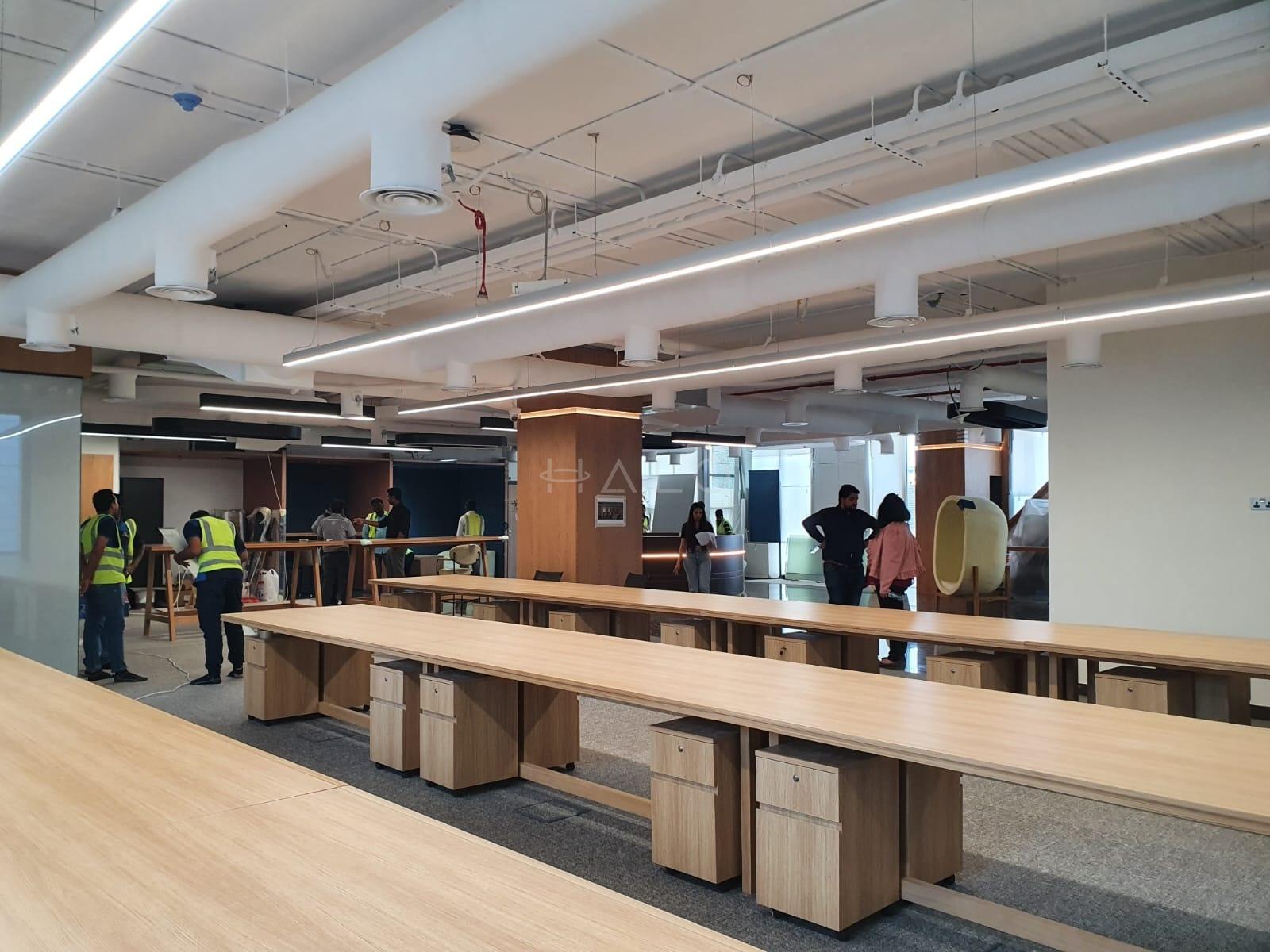
The project photograph shows Halo’s crew finishing workstation joinery at one end of an open-plan office while people walk the floor at the other. It illustrates late-stage works with people present; it is not a record of how that project was phased.
Put the transition on one working sheet
Before moving a department, review a sheet for that particular phase:
| Decision | What to record |
|---|---|
| Temporary workplace | Named team, available seats, essential equipment and the period the arrangement can remain in place. |
| Service cutover | Systems affected, specialist responsible, agreed interruption window and checks before users connect. |
| Work-area boundary | Current marked plan, agreed access arrangements and who checks protection as work progresses. |
| Return to use | Required inspections and permissions, outstanding items and the person authorised to release the area. |
| Fallback | Where the team works if release is delayed, who decides and when that decision must be communicated. |
Keep the sheet with the current programme. When a boundary or move date changes, update the temporary workplace and service entries too. Otherwise, different teams may be preparing for different versions of the move.
Agree what happens if the cutover is not ready
Choose a decision point early enough to notify staff before they travel or move equipment. Name the person who receives readiness reports and confirms the move. An unresolved service test needs an explicit response from the responsible team.
Discuss whether the previous workplace can remain available until the new area is released. If construction will make it unavailable, agree another working arrangement in advance. Ask the contractor to explain which activities can be deferred and which would prevent a return to the old zone. Do not assume a completed service alteration can simply be reversed.
Where the proposed work cannot be safely separated from staff, ask the project team to revise the sequence or arrange temporary relocation. Continued occupation should remain subject to the assessed conditions, required permissions and specialist advice.
Release the next zone after the move has been checked
Have facilities walk the returned area with the contractor and arrange the relevant specialist checks. Let the department lead confirm that the agreed working functions are available. Record unresolved items and whether they affect use, with responsibilities for closure.
The wider office handover checklist covers final records and close-out. For phased work, also keep a dated release for each area so the next team move has a clear starting point.
Send the existing layout, headcount by department and known service restrictions to Halo when discussing an occupied office renovation. Request a proposal that explains each transition, including who confirms readiness before staff move and the following zone becomes a work site.