Choosing a fit-out company for commercial premises is a different exercise from choosing a contractor for a home. The design matters, but the things that decide whether you open on time are jurisdictional: which authority governs the building, what the landlord's fit-out conditions require, how the MEP and fire scope is coordinated, and who holds the NOCs.
This guide covers what to evaluate when the premises are an office, a shop, a clinic or a restaurant. If you are looking for a broader introduction to the market, our comprehensive guide to finding a fit-out company covers the general ground; this one is about the commercial specifics.
Start with jurisdiction, not with the portfolio
Dubai's commercial premises do not all sit under the same approving body. A unit on the mainland, one inside a free zone, and one in a master-developed district can each follow a different submission route, with different drawing requirements and different inspection stages.
Before comparing companies, establish which applies to your premises. Then ask each company two questions: have they delivered inside this specific jurisdiction, and can they name the projects. Experience in one route does not automatically transfer to another, and a company that has worked in your building already knows conditions that would otherwise be discovered late.
- Which authority governs submissions for this building?
- Does the master developer or free-zone authority impose an additional review?
- Which consultant, if any, must be appointed or approved before drawings can be submitted?
- What inspection stages exist between approval and occupancy?
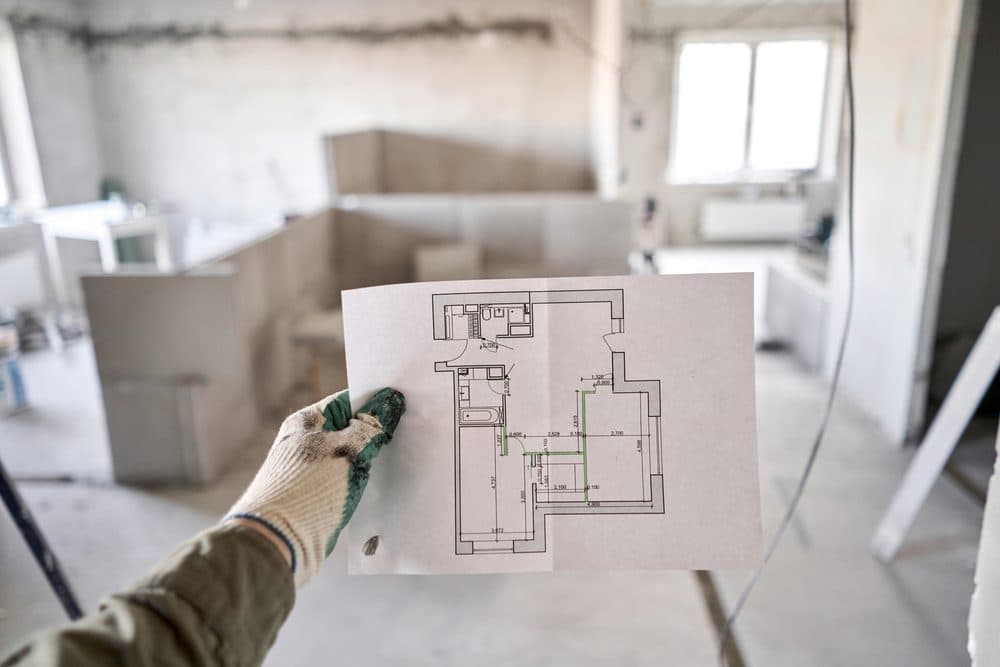
Read the landlord's fit-out guidelines before you fix a layout
Almost every managed commercial building issues fit-out guidelines, and they constrain more than most tenants expect: permitted working hours, ceiling void access, tie-in points for services, acoustic requirements, waste removal routes, shopfront rules, and the deposit and insurance the contractor must lodge.
Ask the fit-out company whether they have obtained and read the guidelines for your building. A company that asks you for them before quoting is planning against real constraints. A company that quotes without them is estimating against a generic assumption, and the gap between the two usually appears as a variation.
Look closely at the MEP and fire scope
This is the part of a commercial fit-out where capability differences are most consequential and least visible in photographs. Partitioning changes air distribution. A new layout changes sprinkler coverage, detection and escape routes. Additional load changes the electrical design. A kitchen or a clinic adds extract, drainage and specialist requirements.
| Area | What to ask | What a weak answer sounds like |
|---|---|---|
| Mechanical | Who designs the revised air distribution, and who verifies it against the base build capacity? | "The AC is existing, we will keep it" |
| Fire and life safety | How is sprinkler, detection and escape coordination handled against the new layout, and who submits it? | "The landlord handles that" |
| Electrical | How is the revised load assessed against the existing supply, and what happens if it is insufficient? | A distribution board allowance with no load assessment |
| Specialist services | For F&B, clinical or lab premises, who scopes extract, drainage, gas or medical requirements? | Treating it as a finishes package |
| As-built information | What is issued at completion, and in what format? | "We will send photos" |
If a company positions MEP as somebody else's responsibility, you are appointing a finishing contractor and will need to appoint the coordination separately. That can work, but it should be a decision rather than a discovery.
Test the programme against how you trade
A commercial programme has to survive contact with your business. Establish early whether the premises will be closed for the duration, trading throughout, or handed over in phases — and check that the quotation reflects it. Night and weekend working, temporary partitioning, protected access routes and out-of-hours deliveries all carry cost, and a programme that quietly assumed vacant possession will not hold.
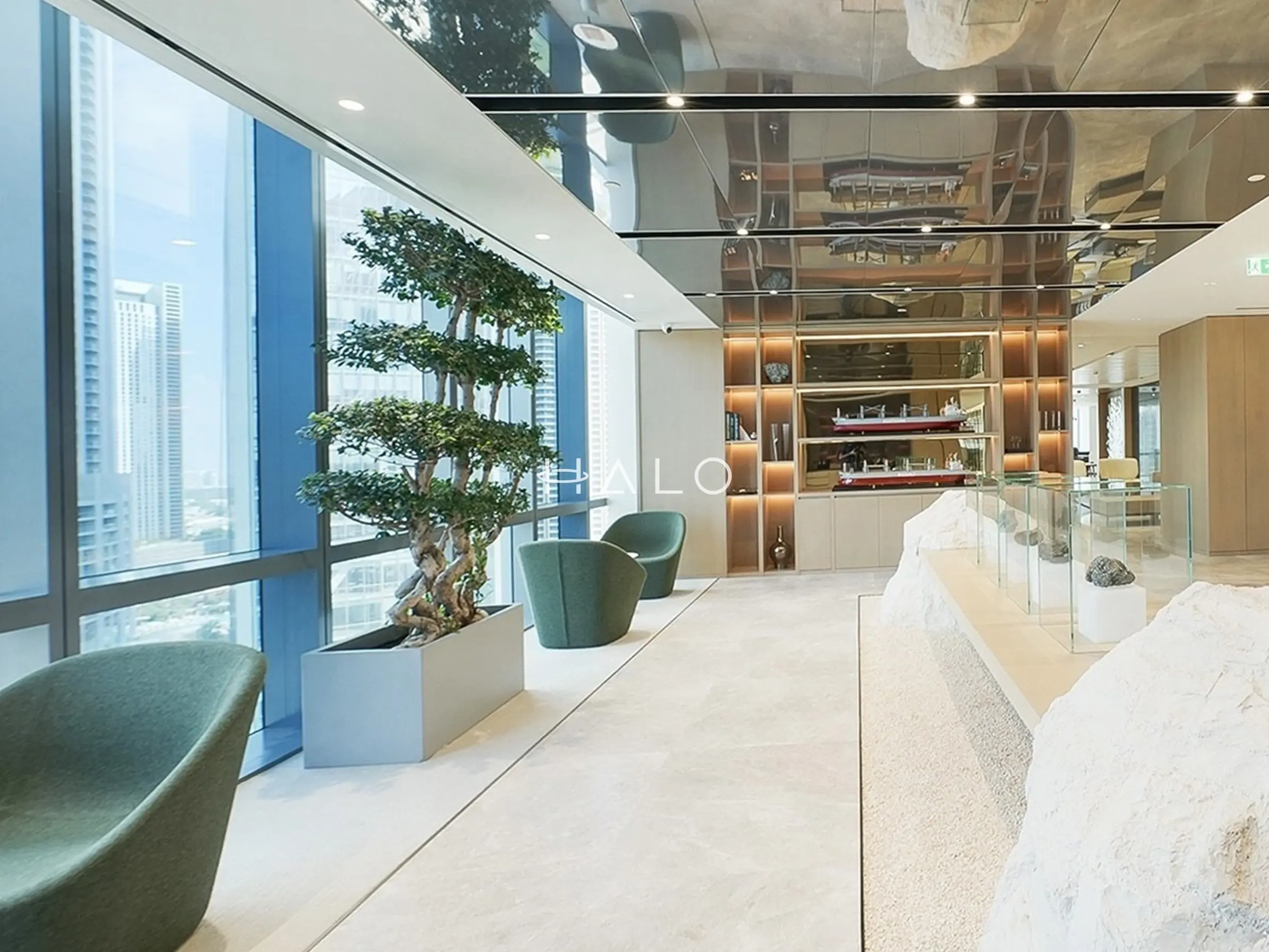
Ask for the programme to show dependencies rather than durations alone: which items are on the critical path, which materials are long-lead, and what the contingency is if an approval stage runs long. Halo plans office, retail and restaurant fit-out around continuity of trading where that is the requirement, because the sequencing decisions have to be made before the layout is fixed, not after.
Check the commercial structure, not only the price
Read the quotation for structure before you read it for total. An itemised scope with stated exclusions, provisional sums marked as provisional, and payment tied to milestones tells you the company has priced a defined project. A lump sum against a one-line description tells you very little, and it removes your ability to change scope without renegotiating everything.
Confirm the trade licence covers the activities in your scope, and that public liability and workmen's compensation cover is current and adequate for the building. Managed buildings frequently require both before a contractor is permitted on site at all, so this is a practical gate rather than a formality.
Agree what completion means before you start
Practical completion, snagging and final handover are three different things, and on a commercial project they have consequences: insurance, occupancy, and when you can trade. Agree the definition of each in writing, along with the defects liability period and how a defect is raised once the site team has moved on.
Ask specifically what you receive at handover: as-built drawings for concealed services, testing and commissioning records, warranties for installed equipment, operation and maintenance information, and the approval documentation you may need to produce later for a licence renewal or an insurance claim.
A practical next step: the brief to send with an enquiry
Sending this with an initial enquiry will get you materially better quotations, because every company is then evaluating the same project.
- The premises: address, floor area, current condition, and whether it is shell-and-core or an existing fitted space.
- The landlord or free-zone fit-out guidelines, if already issued.
- Your operational brief: headcount, seating, treatment rooms, covers, storage or whatever the equivalent is for your business.
- Your trading constraints: target opening date, and whether you must continue operating during the work.
- Any equipment that is fixed, specified or already purchased.
- Known service requirements, particularly extract, drainage, power-hungry equipment or specialist gases.
FAQ
How long does a commercial fit-out take in Dubai?
It depends on the jurisdiction, the scope and the base-build condition, and the approval stages are usually the least predictable part. Rather than accepting a headline duration, ask for a programme that separates approvals, long-lead procurement and site works, and shows which of them sit on the critical path.
Should the fit-out company also handle the design?
A single party covering design and delivery removes the interface where most variations originate, because the drawing and the buildability sit with the same team. Where they are separate, agree in advance who resolves a conflict between the two and who carries the cost when a detail has to change on site.
What is usually excluded from a fit-out quotation?
Commonly: authority and landlord fees, loose furniture, IT and AV infrastructure, specialist equipment, and any base-build upgrade found to be necessary once surveys are done. None of these are unreasonable exclusions — but they should appear on a written exclusions list rather than emerging afterwards.
Does a fit-out company need to be registered with my building?
Many managed buildings and free zones maintain an approved or registered contractor list, and some will not admit a contractor who is not on it. Check this early, because it can eliminate an otherwise strong candidate after you have already invested time in the process.