Most renovation disputes in Dubai are not arguments about taste. They are arguments about scope, approvals and who was responsible for something nobody wrote down. The vetting you do before appointing an interior contractor is what decides whether those conversations happen at all.
The eight criteria below are the ones worth resolving in writing, before a deposit is paid. They apply whether the project is a full villa renovation, an apartment refurbishment or a single-room scope. None of them require you to be technical — they require you to ask for documents and read the answers.
Criterion#1The trade licence, and the scope it actually covers
Ask for the trade licence and read the listed activities. A licence permitting interior decoration is not the same as one permitting structural alteration, and neither covers electrical or mechanical work on its own. The question to ask is not "are you licensed" — everyone answers yes — but "which of the activities on my scope does this licence cover, and who holds the licence for the rest".
Where part of the work sits outside a contractor's own licence, that is normal. What matters is whether they tell you before the quotation, and who carries the responsibility for coordinating it.
Criterion#2Who prepares and submits the approvals
Approvals are the most common source of unplanned delay on a Dubai renovation, and the applicable route depends on the property. A villa on freehold land, an apartment in a managed tower and a unit inside a free-zone development can each sit under a different authority and a different set of building-management conditions.
Establish, in writing:
- Which authority or authorities apply to this property and this scope.
- Whether building management or the master developer issues its own fit-out conditions, and who obtains them.
- Who prepares the drawings for submission, and who pays for resubmission if a package is rejected.
- What the contractor's assumed approval timeline is, and what happens to the programme if it runs longer.
A contractor who answers these precisely has done it before. A contractor who treats approvals as your problem is telling you something useful.
Criterion#3Insurance, and what it would actually pay out
Ask for current certificates rather than assurances. The two to look at are public liability and workmen's compensation. Check the expiry date, check the insured party matches the company on the quotation, and check the sum insured is not trivial relative to your property.
If the contractor intends to subcontract MEP, joinery or specialist finishing, ask whether those firms carry their own cover or sit under the main contractor's policy. On an occupied property or a building with shared services, this is not a formality.
Criterion#4How the quotation is structured
A single figure against "renovation works" cannot be compared, negotiated or audited. What you want is an itemised scope: quantities where they are known, allowances stated as allowances, and exclusions written down rather than implied.
| What to look for | Why it matters |
|---|---|
| Line-item breakdown by trade or area | Lets you compare quotations that assumed different scopes, and lets you remove work without renegotiating everything |
| Provisional sums marked as provisional | Tells you which numbers are estimates that will move once selections are made |
| A written exclusions list | Most cost disputes come from work that both parties assumed the other had priced |
| Named specification for major materials | "Porcelain tile" is a category, not a specification; the price gap within it is large |
| Payment schedule tied to milestones | Payment against completed stages rather than dates keeps the incentive aligned |
Be equally careful with a rate per square foot. It is a useful sanity check across quotations, but it carries no information about condition, scope depth or specification, and it should not be the basis of an appointment.
Criterion#5Directly employed trades versus subcontracted work
Neither model is wrong. A contractor with in-house joinery, MEP and finishing teams has more control over sequencing and quality; a contractor who subcontracts can still deliver well if the coordination is genuinely theirs.
What you are testing is accountability. Ask which trades are employed directly, which are subcontracted, and who your single point of contact is when two trades disagree on site. If the answer is that you will be speaking to each trade separately, you have been quoted for a set of services rather than a managed project.
Criterion#6Programme, phasing and whether you are living there
A programme should show stages and dependencies, not just a start and an end date. Ask which activities are on the critical path, and what the contractor's plan is for the two things that most often move it: approvals and long-lead materials.
If the property is occupied or partially occupied, phasing becomes a design question rather than a scheduling one. Dust separation, water and power isolation, working hours permitted by building management, and access for deliveries all need to be agreed before work starts. Halo's villa renovation and apartment renovation scopes are planned around these constraints rather than after them.
Criterion#7Joinery and finishing capability
Joinery is where the difference between contractors becomes most visible, because it is bespoke, it is measured on site, and it cannot be corrected with a second coat. Ask to see completed work in person rather than in renders — ideally a project of comparable specification, at least a year old.
When you see it, look at the parts nobody photographs: how doors and drawers align after a year of use, how a run of cabinetry meets an uneven wall, how the edge of a stone worktop is finished, and how a shadow gap holds its line at a corner. Halo's joinery work sits inside the fit-out scope rather than being bought in, which is one of the things worth asking any contractor about directly.
Criterion#8Snagging, handover documentation and what happens afterwards
Agree before you start what handover consists of. At minimum, that means a joint snagging inspection, a written list with agreed completion dates, and a defects liability period with a stated duration and a stated route for raising an issue.
Ask what you receive at handover. As-built information for anything concealed, warranty documentation for appliances and installed equipment, paint and material references for future touch-ups, and the contact who handles a defect in month eight rather than week one. A contractor who has thought about month eight is usually the one who built accordingly.
A practical next step: the pack to bring to a site visit
Before you meet contractors, assemble the following. It shortens the vetting considerably, because every contractor is then pricing the same project.
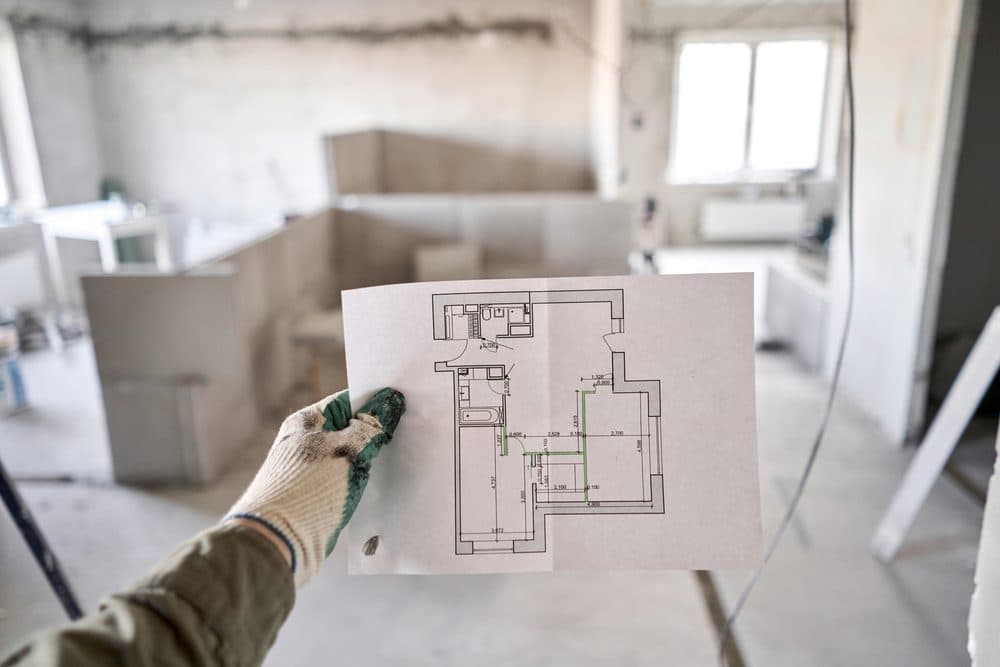
- A plan of the property, or the clearest one available, with the rooms in scope marked.
- Photographs of every space in scope, including ceilings, existing service points and anything already damaged.
- Your written scope: what is being removed, replaced, retained and added.
- Any fit-out conditions or approval guidance already issued by building management or the master developer.
- Your constraints: budget range, target dates, and whether the property will be occupied during the work.
- Reference images, each labelled with what it is meant to solve rather than presented as a general mood.
FAQ
How many contractors should I get quotations from?
Three is usually enough to expose the range, provided all three are quoting against the same written scope. Beyond that you tend to add noise rather than information, and comparing quotations built on different assumptions is worse than comparing fewer.
Is a low quotation always a problem?
Not always, but it is always a question. Ask what has been excluded, what has been treated as a provisional sum, and what specification was assumed for the major materials. A genuinely lower price usually has a visible reason in the scope. A price that is lower for no stated reason tends to reappear later as a variation.
Do I need approvals for a renovation that does not move walls?
It depends on the property and the scope. Finish-only work, changes to services, and anything affecting the building structure or shared systems can sit under different requirements, and managed buildings often impose their own conditions regardless. Confirm the applicable route with building management and the appointed contractor before work begins rather than assuming.
Should the designer and the contractor be the same company?
They do not have to be, but someone has to own the interface between the drawing and what is buildable. Where design and delivery sit with separate parties, agree explicitly who resolves a conflict between them, and who absorbs the cost when a detail cannot be built as drawn.